
The information on Supplement Engine is for general educational purposes only and is not medical advice. It is not intended to diagnose, treat, cure, or prevent any disease, and should not replace consultation with a qualified healthcare professional. Availability and legal status of specific products vary by country — always check local regulations before purchasing. Supplement Engine is not affiliated with, endorsed by, or representative of the individuals whose public protocols are discussed on this site; all information is drawn from public statements and is provided for informational purposes only.
Some links on this page may be affiliate links. If you choose to make a purchase, we may earn a small commission at no additional cost to you.
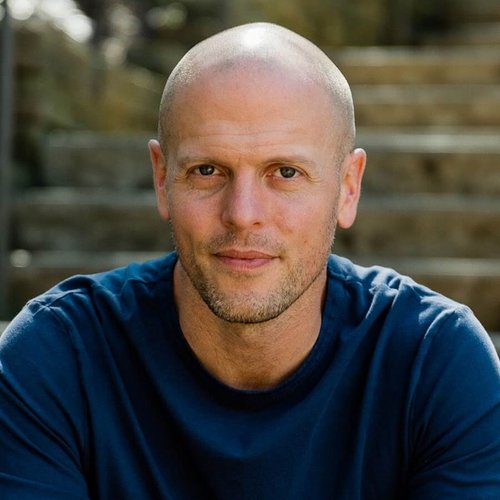
Tim Ferriss
Podcast host and author known for experimenting with supplements, routines, and performance protocols.
Curated from public research summaries by a non-clinician. Not medical advice.
No hand-verified item-level primary source distinguishing Ferriss’s own use from guest protocols is published here yet. The Huberman sleep transcript is attributed to Huberman, not Ferriss.
Read the sourcing methodologyNo item-level record meeting this page's citation standard is currently published for Tim Ferriss. We don't infer a stack from general discussion, sponsorships, or business ties.
About Tim Ferriss
Tim Ferriss stands out in the crowded world of health and fitness influencers by blending personal experimentation with a keen interest in scientific inquiry. Over the past two decades, he has carved a niche as a self-styled "lifestyle hacker," whose work extends beyond fitness and nutrition into productivity, entrepreneurship, and well-being.
His approach is characterized by rigorous self-tracking, willingness to trial unconventional methods, and a public sharing of successes and failures alike.
While some know Ferriss primarily as the author of the bestselling 4-Hour book series, his footprint in health and fitness is notable for its focus on optimizing physical performance and recovery. His podcast has expanded this reach, featuring conversations with experts from diverse fields, from professional athletes to medical researchers.
This combination of personal narrative and expert dialogue has helped popularize certain supplements, exercise protocols, and recovery techniques among a broad audience.
Ferriss’s work sits at the intersection of lifestyle design and biohacking, aiming to extract maximal results with minimal effort. Yet, this approach has invited both admiration and skepticism, especially among more traditional healthcare professionals.
The tension between his experimental style and the rigorous standards of medical research frames much of the discourse around his influence.
Background and Public Profile
Timothy Ferriss was born in 1977 and initially gained widespread attention with The 4-Hour Workweek, a book that challenged conventional ideas about work and life balance. This success enabled him to explore other interests, including health and fitness, where he applied the same principles of efficiency and experimentation.
He has authored several books, including The 4-Hour Body, which compiles many of his personal experiments with diet, exercise, and supplements. As a podcast host, Ferriss has interviewed hundreds of guests, often focusing on performance optimization and longevity.
His public persona is that of a curious autodidact rather than a formally trained expert.
Ferriss’s influence extends beyond books and podcasts. He has invested in and advised startups in the health and wellness sector, helped fund research into psychedelic therapies, and advocated for evidence-based approaches to mental and physical health.
His willingness to question orthodoxies and promote novel ideas resonates with an audience eager for practical, actionable advice.
The Core Training Philosophy
At the heart of Ferriss’s approach is the principle of minimum effective dose—the smallest amount of effort or input needed to achieve a desired outcome. This philosophy challenges the traditional “more is better” mindset prevalent in fitness culture.
He emphasizes high-impact, short-duration workouts designed to maximize efficiency. Techniques like slow-motion strength training, kettlebell swings, and intermittent fasting have featured prominently in his recommendations.
He often encourages self-experimentation, urging followers to track their own responses to different protocols.
Another key element is biofeedback and data collection. Ferriss is an early adopter of tools that allow users to monitor sleep quality, hormone levels, and metabolic markers.
By combining quantitative data with qualitative self-reporting, his method aims to individualize fitness strategies rather than prescribe one-size-fits-all programs.
Credibility Signals and Limitations
Ferriss’s credibility is strengthened by his transparency about the limits of his methods and his reliance on experts. He frequently cites scientific studies and interviews researchers to validate or refine his experiments.
His books include extensive footnotes and references, which is uncommon for popular health literature.
His background as an entrepreneur and investor rather than a healthcare professional means he does not claim formal expertise in medicine or physiology. This outsider status can be a double-edged sword: it allows for creative thinking but may lead to oversimplification or overgeneralization.
Critics have pointed out that some of Ferriss’s experiments lack rigorous scientific controls, and anecdotal results may not generalize. The emphasis on rapid optimization can sometimes overshadow the importance of gradual, sustainable habits and well-established guidelines.
What They Get Right
Ferriss’s insistence on evidence-based self-experimentation encourages critical thinking and personal responsibility in health management. His approach demystifies complex topics, making them more accessible without sacrificing nuance.
He also highlights the importance of recovery, sleep, and mental health—areas often neglected in traditional fitness advice. By incorporating mindfulness, meditation, and stress management, Ferriss promotes a holistic view of well-being.
His advocacy for data-driven decisions aligns with modern trends in personalized medicine and fitness. This empowers individuals to move beyond generic advice and tailor interventions to their unique biology and lifestyle.
- Emphasis on minimal effective dose reducing burnout and injury risk
- Promotion of biofeedback tools and self-tracking for personalization
- Integration of mental health and recovery practices alongside physical training
Nutrition, Diet, and Supplement Position
Ferriss is known for experimenting with various dietary strategies, including slow-carb diets, intermittent fasting, and ketogenic approaches. His recommendations often prioritize simplicity and adherence, focusing on macronutrient balance and meal timing to optimize body composition and energy levels.
He has popularized the use of certain supplements such as magnesium, creatine, and nootropics, typically framing them as tools to support performance and recovery rather than cures or quick fixes. His discussions are usually grounded in scientific literature, although he also draws on personal experimentation and guest expertise.
Ferriss advocates caution with supplementation, emphasizing that individuals should monitor effects closely and avoid overreliance. He underscores that nutrition is highly individual and recommends adjusting protocols based on one’s personal goals and reactions.
Where People Disagree With Them
Some health professionals and researchers express caution about Ferriss’s emphasis on rapid experimentation and unconventional methods. Concerns arise around the reproducibility of his findings and the potential risks of self-guided protocols without medical supervision.
His approach to intermittent fasting and extreme diet modifications has been questioned for suitability across different populations, particularly those with underlying health conditions or nutritional needs not addressed by one-size approaches.
Additionally, the appeal to biohacking can sometimes overshadow fundamental lifestyle factors, such as consistent physical activity and balanced nutrition, which have robust evidence bases. Critics note that a focus on supplements and gadgets may divert attention from these basics.
- Risks of self-experimentation without clinical oversight
- Potential overgeneralization of individual experiments
- Debate over suitability of aggressive dietary interventions for all
Who Their Advice Fits Best
Ferriss’s guidance is best suited for self-motivated individuals interested in biohacking and willing to engage in detailed self-monitoring. Those comfortable with a trial-and-error approach and open to adjusting based on personal data may find his methods empowering.
His advice tends to resonate with people who have some baseline fitness experience and are looking for ways to optimize rather than overhaul their health. Entrepreneurs, busy professionals, and those seeking efficiency in their routines often appreciate the focus on minimal effective dose.
However, beginners in fitness or those with complex medical conditions should approach his recommendations with caution and preferably seek professional guidance alongside any experimentation.
What To Take From This
Tim Ferriss represents a distinctive blend of curiosity, pragmatism, and self-quantification in the health and fitness space. His contributions have helped popularize a culture of informed experimentation and personal data use.
While not a substitute for medical advice or evidence-based clinical guidelines, his work offers valuable insights into how individuals can tailor fitness and nutrition strategies to their own physiology and goals. The core lesson is to approach health optimization thoughtfully, with attention to both scientific evidence and personal response.
Ultimately, Ferriss’s influence underscores the potential—and the limits—of self-directed health experimentation in an era of rapidly evolving tools and knowledge. His legacy may be less about specific protocols and more about empowering people to take an active role in their own well-being.
Related guides
⚠️ Based on public podcast discussions and published books. This information is for educational purposes only and should not be considered medical advice.